
Keynote Speakers
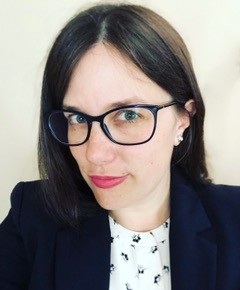
Melissa Baese-Berk (University of Chicago) is Professor of Linguistics at the University of Chicago, where she directs the Speech Perception and Production Lab. Her research focuses on phonetics, phonology, and psycholinguistics, examining how speech perception and production interact, particularly in second-language acquisition. Baese-Berk’s work has been published in leading journals such as Journal of Phonetics, Journal of the Acoustical Society of America, Psychonomic Bulletin & Review, and Applied Psycholinguistics, where she also serves as Editor-in-Chief.
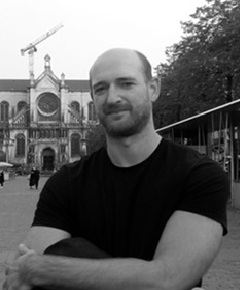
Bram Bulté (Council of the European Union & Vrije Universiteit Brussel) is a linguist at the Council of the European Union and a visiting professor affiliated with the Centre for Linguistics (CLIN) at Vrije Universiteit Brussel (VUB). His research focuses on second language acquisition, with particular emphasis on linguistic complexity, accuracy, and fluency in language development. Bulté has contributed to the field through publications in journals such as Language Learning, Journal of Second Language Writing, and System.
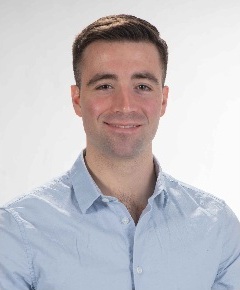
Vincent DeLuca (UiT The Arctic University of Norway) is Professor of Linguistics at UiT The Arctic University of Norway, where he leads the Brain Domain in the Center for Language, Brain and Learning (C-LaBL). His research investigates how bilingual language experiences shape the brain and cognition over time and is anchored in the UBET (Unifying the Bilingual Experience Trajectories) framework, a comprehensive model that maps how specific factors, such as language use, switching, proficiency, and duration, individually and interactively drive neurocognitive adaptation. DeLuca work has been published in leading journals such as Proceedings of the National Academy of Sciences (PNAS), Cerebral Cortex, NeuroImage, and the Journal of Neurolinguistics.
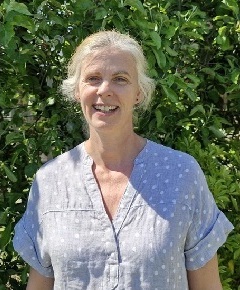
Emma Marsden (University of Oxford) is Professor of Language Education at the University of Oxford, where she specializes in instructed second language acquisition. Her work focuses on the learning, teaching, and testing of morphosyntax, input processing, the roles of different knowledge types, and attitudes to language learning in instructed contexts. Marsden’s work has been published in leading journals, including Studies in Second Language Acquisition, Applied Psycholinguistics, The Modern Language Journal, and Second Language Research. She served as an editor of Language Learning (2015–2022). Marsden also (co-)directs international initiatives to facilitate open scholarship, including IRIS for materials and data (iris-database.org) and OASIS for accessible summaries (oasis-database.org).
Language Learning Round Table
Topic | Pathways to Impact: Connecting Research, Innovation, and Society
Date | Wednesday, 24 June 2026
Time | 14:00–17:00
Moderator | Professor Patrick Rebuschat, Lancaster University
This Round Table explores how research on second language learning, multilingualism, and language technologies can generate impact beyond academia. Bringing together perspectives from research, school leadership, public institutions, education policy, digital learning, and responsible AI, the session will focus on how evidence and expertise can be translated into practice.
The discussion will examine two connected pathways to impact. First, it will consider how research on language learning and multilingual experience can inform inclusive education, teacher training, curriculum development, assessment, public engagement, and language policy. Second, it will explore how advances in AI-supported language education, speech technology, and machine translation can support innovation while remaining responsive to educational and societal needs.
The aim is to move from broad ambition toward a more concrete discussion of impact. The invited speakers bring substantial experience in working across sectors, including collaborations between researchers, schools, public institutions, policymakers, educational organizations, technology developers, and industry partners. The Round Table will draw on these experiences to consider what helps research travel more effectively into schools, public institutions, international organizations, and technology-mediated learning environments. It will invite reflection on where language research can make a difference, what kinds of partnerships are needed, and how researchers, policymakers, practitioners, and technology developers might work together more effectively and responsibly.
Speakers
Ana Cláudia Cohen
Director, Alcanena School Cluster
Ana Cláudia Cohen is Director of the Alcanena School Cluster (Agrupamento de Escolas de Alcanena), a local public school cluster in central Portugal that brings together 20 educational establishments under one leadership structure. The cluster covers preschool, primary, lower-secondary, and secondary education, giving her a broad perspective on how educational policy, innovation, inclusion, and language education are implemented across a local school system. She has a background in language education, with a degree in English and German from the Faculty of Arts and Humanities, University of Lisbon, and advanced postgraduate training in Educational Sciences at the School of Social Sciences and Humanities, NOVA University Lisbon. As a school leader, she has been associated with work on educational models, citizenship, inclusion, and human rights. She has also participated in the “Largest Lesson in the World,” a global education initiative linked to the United Nations Sustainable Development Goals, including in an event with the President of Portugal, Marcelo Rebelo de Sousa. Her perspective grounds the discussion in the realities of school leadership, teacher practice, pupils, families, and local communities.
Professor Gigi Luk
Professor, Department of Educational and Counselling Psychology, McGill University
Professor Gigi Luk is Professor in the Department of Educational and Counselling Psychology at McGill University, where she also directs the M.Ed. concentrations in Educational Psychology and Human Development. She is Director of the Bilingualism Experience Education (B.E.E.) Lab, which studies bilingualism as a life and learning experience in children, adolescents, and adults. Her research examines bilingualism across the lifespan, with a focus on language and literacy development, cognitive development, and the neural mechanisms involved in learning. The B.E.E. Lab investigates the cognitive, linguistic, and learning mechanisms that underlie bilingual experience, while also examining how bilingualism is shaped by the environments in which people live and learn. Her work connects scientific questions about bilingual cognition and learning with educational questions about literacy, inclusion, and linguistic diversity. Her perspective brings together bilingualism research, educational psychology, neuroscience, and equity-oriented educational practice.
Professor Detmar Meurers
Head of the Language and AI in Education Lab, Leibniz-Institut für Wissensmedien; Professor of Computational Linguistics, University of Tübingen
Professor Detmar Meurers is Head of the Language and AI in Education Lab at the Leibniz-Institut für Wissensmedien (Leibniz Institute for Knowledge Media) in Tübingen and Professor of Computational Linguistics at the University of Tübingen. His research sits at the interface of computational linguistics, second language acquisition, and empirical educational research. He works on linguistic complexity, learner corpora, automated analysis of learner language, reading comprehension, intelligent tutoring systems, adaptive learning technologies, and AI-supported feedback and assessment. A distinctive feature of his work is the systematic development and evaluation of digital tools in real educational settings, including schools, using randomized controlled field studies and learning analytics. His work also involves collaboration with non-academic stakeholders, including educational publishers, schools, public education partners, and the Camões Institute, Portugal’s public institute for international cooperation and the promotion of Portuguese language and culture. His perspective connects language research with educational technology, classroom implementation, and the responsible use of AI to support language learning.
Professor Helena Moniz
Assistant Professor, School of Arts and Humanities, University of Lisbon; Researcher, INESC-ID; President, European Association for Machine Translation
Professor Helena Moniz is Assistant Professor at the School of Arts and Humanities, University of Lisbon, and a researcher at INESC-ID (Institute for Systems and Computer Engineering, Research and Development), working across computational linguistics, speech processing, machine translation, post-editing, and responsible AI. She is President of the European Association for Machine Translation and previously served as President of the International Association for Machine Translation. She is also a Board Member of the International Speech Communication Association, Chair of the Ethics Committee of the Center for Responsible AI, and a Visiting Research Fellow at the UNESCO Chair in Translating Cultures. Her work connects human language technologies with translation, speech, linguistic quality assessment, ethics, and real-world AI applications. From 2015 to 2024, she led a bilateral project between INESC-ID and Unbabel, a translation company combining AI and post-editing, developing scalable linguistic quality assurance processes for translation workflows. Her perspective brings language research into direct contact with technology development, professional translation practice, responsible innovation, and the societal implications of AI-mediated communication.
Rui Vaz
Director of Language Services, Camões Institute
Rui Vaz has been Director of Language Services at the Camões Institute since March 2019. Camões is Portugal’s public institute for international cooperation and the promotion of Portuguese language and culture worldwide. In this role, he oversees work related to Portuguese language teaching, teacher training, certification, digital resources, and cultural outreach across international networks, including Portuguese-speaking and diaspora communities. His background combines classroom teaching, teacher education, digital learning, publishing, and language-policy implementation. After completing degrees in Portuguese language and literature and professional teacher education at the University of Lisbon, he became a permanent teacher in 1996 and taught Portuguese in schools, while also coordinating pedagogical, ICT, and teacher-training initiatives. Between 2007 and 2012, he collaborated with Porto Editora, one of Portugal’s leading educational publishers, on the scientific review of textbooks for Portuguese as a non-native and foreign language. From 2007, he worked with Camões on the Centro Virtual Camões (Camões Virtual Center), its online platform for Portuguese language, literature, culture, and distance learning. His experience connects language education, educational publishing, public institutions, digital provision, certification, and international cooperation.
Professor Patrick Rebuschat
Moderator | Lancaster University
Professor Patrick Rebuschat is Professor of Linguistics and Cognitive Science and Camões Institute Chair for Multilingualism and Diversity at Lancaster University. His research examines how children and adults learn and process additional languages, with a particular focus on multilingualism, second language acquisition, heritage language bilingualism, statistical learning, and implicit learning. He received his PhD from the University of Cambridge and his BA from the University of Lisbon. At Lancaster, he co-directs the Lancaster Language Learning Lab and the Multilingualism and Cognition Research Group. His ongoing roles also include serving on the Advisory Board of Native Scientist, an organization that connects scientists with children from migrant and multilingual communities through outreach activities in their heritage languages. He has previously led the NOVA Lancaster Partnership and the Heritage Language 2 Consortium, a strategic partnership involving six leading universities and the Portuguese Ministry of Foreign Affairs. He also served as Director of Internationalization for Lancaster’s Faculty of Arts and Social Sciences and as President of the Scientific Advisory Board of PARSUK, the association of Portuguese researchers and students in the United Kingdom. His work connects research, public engagement, scientific diplomacy, and language-policy initiatives.
Program
14:00–14:15 | Opening remarks
14:15–15:15 | Panelist statements
15:15–15:45 | Coffee break
15:45–16:00 | Musical interlude
16:00–16:30 | Structured discussion
16:30–16:55 | Audience Q&A
16:55–17:00 | Closing remarks
Scientific Committee
We gratefully acknowledge the reviewers for their careful evaluation and valuable feedback on the submitted proposals:
Aarnes Gudmestad
Adelina Castelo
Aina Casaponsa
Akira Murakami
Alberto Frasson
Alex Boulton
Alex Housen
Alexandra Fiéis
Alexandra Schurz
Alexandra Vraciu
Alicia Luque
Amanda Edmonds
Amanda Huensch
Amber Dudley
Amália Mendes
Ana Espírito Santo
Ana Lúcia Santos
Ana Madeira
Ana Pellicer-Sánchez
Ana Rita Sa Leite
Anabela Rato
Anastasia Drackert
Anastasia Makarova
Anastasia Pattemore
Anat Prior
Anders Agebjörn
Andrea Revesz
Anita Thomas
Anna Balas
Anna Krulatz
Annarita Magliacane
Anne Dahl
Anne Marie Devlin
Annika Andersson
Ann-Kristin Helland Gujord
Ariadna Sanchez-Hernández
Arnaud Arslangul
Audrey Rousse-Malpat
Ayse Gurel
Bart Deygers
Bastien De Clercq
Batia Laufer
Bene Bassetti
Brechje van Osch
Bryan Donaldson
Carmen Muňoz
Cathy Cohen
Cecile DeCat
Cecilia Gunnarsson
Chao Zhou
Charlotte Alazard-Guiu
Christian Rathmann
Christina Lindqvist
Christine Dimroth
Christine Moeller-Omrani
Christophe dos Santos
Christos Pliatsikas
Clara Amorim
Clare Wright
Claudia Felser
Csaba Szabo
Dalila Ayoun
Dana Gablasova
Danijela Trenkic
David Singleton
Delphine Guedat-Bittighoffer
Dennis Wegner
Despina Papadopoulou
Diana Santos
Didier Maillat
Eirini Apostolopoulou
Eivind Nessa Torgersen
Elisabet Pladevall-Ballester
Elke Peters
Elsa Tragant
Ewa Lenart
Fabian Santiago
Fatih Bayram
Fatima Silva
Federico Gallo
Floor van den Berg
Folkert Kuiken
Freideriki Tselekidou
Frida Splendido
Gabriela Tavares
Gabriele Pallotti
Gerrit Jan Kootstra
Gigi Luk
Gisela Granena
Gisela Håkansson
Giulia Berchio
Griet Boone
Guro Busterud
Heike Wiese
Holger Hopp
Iga Krzysik
Immaculada Miralpeix
Ineke Vedder
Ingrid Mora-Plaza
Inès Saddour
Irina Elgort
Jacopo Saturno
Jana Gamper
Jiuzhou Hao
Joan C. Mora
Joao Veloso
John Williams
Jonas Granfeldt
Jonathon Ryan
Jonny Serfaty
Jorge Pinto
Judit Kormos
Judith Schlenter
Julie Mason
June Eyckmans
Júlia Barón
Karen Roehr-Brackin
Kateryna Iefremenko
Kathy Conklin
Kathy Kim
Katja Francesca Cantone
Kazuya Saito
Kevin McManus
Kirill Elin
Koen Van Gorp
Kristin Killie
Krystyna Warchal
Lars Bokander
Laura Dominguez
Leah Bauke
Lenka Garshol
Letícia Almeida
Lewis Baker
Luciana forti
Madeleine Voga
Magali Paquot
Magdalena Wrembel
Malin Ågren
Marcin Opacki
Marcos Garcia
Maria Vender
Maria-del-Mar Suárez
Marianne Gullberg
Marianne Nikolov
Marie-Pierre Jouannaud
Marijana Macis
Marion Tellier
Marisa Cruz
Marit Westergaard
Marjolijn Verspoor
Marta Velnic
Martin Howard
María del Pilar García Mayo
Mason Wirtz
Matthew Pattemore
Maud Pélissier
Maud Westendorp
Mayya Levkina
Merete Anderssen
Mia Halonen
Minjeong Son
Miquel Llompart
Mireia Ortega
Mirosław Pawlak
Monika Bader
Natalia Meir
Natalia Mitrofanova
Nathalie Dherbey
Nathan Vandeweerd
Natsuko Shintani
Neal Snape
Nicole Busby
Norbert Schmitt
Nélia Alexandre
Oksana Afitska
Patrick Rebuschat
Pablo Gamallo
Padraic Monaghan
Paolo Mairano
Parvaneh Tavakoli
Pascale Leclercq
Pascale Trevisiol
Pauliina Peltonen
Paulina Zydorowicz
Pauline Beaupoil-Hourdel
Pavel Trofimovich
Pedro Guijarro-Fuentes
Philippe Prévost
Pia Sundqvist
Pouran Seifi
Rachel Shively
Rakel Österberg
Raphael Berthele
Raquel Serrano
Rasmus Steinkrauss
Rob Schoonen
Roger Gilabert
Rosa Alonso
Rosane Silveira
Rowena Kasprowicz
Sandra Benazzo
Sara Feijoo
Sara Kosutar
Sarah Liszka
Sarah Schimke
Saveria Colonna
Selim Tiryakiol
Sergio Pereira Soares
Sible Andringa
Simon Ruiz
Sofia Martinho
Sofie Johansson
Stefania Ferrari
Stefania Spina
Stuart Webb
Suhad Sonbul
Susana Correia
Svenja Krieger
Taina Mylläri
Tanya Ivanova-Sullivan
Teresa Parodi
Terje Lohndal
Theodoros Marinis
Thomas Wagner
Tom Rankin
Toms Voits
Unn Røyneland
Ute Bohnacker
Vanessa De Wilde
Verena Wecker
Victoria Murphy
Vincent DeLuca
Violaine Bigot
Vita Kogan
Vivienne Rogers
Yucel Yilmaz
Yuxin Ge
Zhe Gao
Organizers
EuroSLA 35 is organized by:
Professor Susana Correia (Organizational Lead) |NOVA University Lisbon
Dr. Yuxin Ge (Co-organizer) | NOVA University Lisbon & Lancaster University
Professor Patrick Rebuschat (Co-organizer) | Lancaster University
Dr. Gabriela Tavares (Co-organizer) | University of Lisbon
